Call 1-631-753-8390 or Contact Us - We're Happy to Help!
Please choose a body region on the right for you to pin point the problem area of your body.

Shop by Condition

Shop by Brand
Choosing the right type of socks can significantly impact your foot health, especially if you have specific medical conditions such as diabetes or circulation issues. Diabetic socks and compression socks are both designed to provide unique benefits, but they serve different purposes. Understanding the differences between diabetic socks vs. compression socks can help you make an informed choice that best suits your needs. In this article, we will explore the key features and benefits of each type, helping you decide which is right for you.
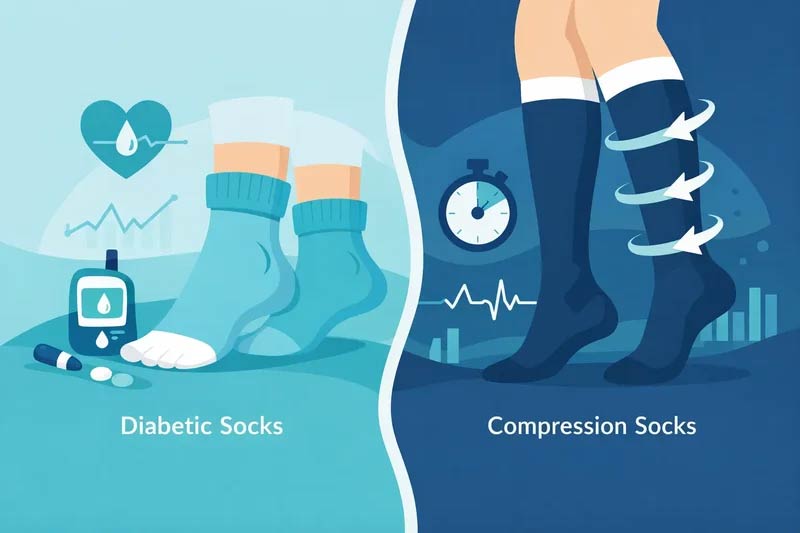 Understanding Diabetic Socks
Diabetic socks are specifically designed for individuals with diabetes to provide extra comfort and protection for their feet. One of the primary purposes of diabetic socks is to enhance blood circulation without constricting the feet or lower legs. These socks are typically non-binding and have a loose fit, which helps prevent restriction of blood flow. This feature is crucial for people with diabetes who may have poor circulation or are prone to foot complications such as neuropathy and ulcers.
Diabetic socks are often made from materials that wick away moisture, helping to keep feet dry and reduce the risk of infections. The absence of seams in diabetic socks minimizes friction and pressure, preventing blisters and sores that can lead to more severe complications.
Compression socks, on the other hand, are designed to improve blood flow and reduce swelling by applying graduated pressure to the legs and feet. This pressure helps to support the veins and improve circulation, which can be beneficial for individuals with conditions such as varicose veins, deep vein thrombosis (DVT), or chronic venous insufficiency. Compression socks are also commonly used by athletes to enhance performance and reduce muscle soreness, as well as by travelers to prevent leg swelling and blood clots during long flights.
The main distinction between diabetic socks and compression socks is found in their design and their specific uses. Diabetic socks are crafted to offer a soft, non-restrictive fit that enhances blood circulation while also shielding the feet from injuries and infections. These socks are particularly beneficial for people with diabetes, as they help to maintain foot health and prevent complications related to the condition.
In contrast, compression socks are designed to apply graduated pressure to the legs to improve blood flow and reduce swelling. They are beneficial for individuals with circulation issues, such as varicose veins or DVT, as well as for those who spend long periods standing or sitting. The pressure provided by compression socks can help to prevent blood pooling in the legs and reduce the risk of blood clots.
When deciding between diabetic socks and compression socks, it’s essential to consider your individual health needs and lifestyle. If you have diabetes and are concerned about foot health, diabetic socks are a great choice to keep your feet comfortable, dry, and protected from injuries. They are particularly beneficial if you have issues with circulation or are prone to developing foot complications.
Choosing between diabetic socks vs. compression socks depends on your specific health needs and conditions. Diabetic socks offer comfort and protection for those with diabetes, while compression socks provide crucial support for improving circulation and reducing swelling.
Explore our catalog at CWI Medical for high-quality diabetic and compression socks designed to meet your specific needs. Our products are crafted to provide the comfort and support you need to maintain healthy feet and legs. Browse our selection today and discover how we can help you find the perfect socks for your health and lifestyle.
| Stay Connected! |  |
 |
 |
 |
Related Articles





Get $10 off your next order when you sign up to receive our email newsletter.*
Simply enter your email address below!
*Minimum order value of $100. Valid email address to qualify.